Commercial Governance: A Framework for Successful Project Delivery
Introduction In the delivery of infrastructure projects, success is not incidental—it is structured, governed, and contractually managed. Commercial governance ensures that cost, risk, performance, and contract obligations are precisely controlled. When established early and implemented consistently, governance becomes the foundation for profitable and predictable outcomes. This article sets out a practical commercial and contractual governance…

Introduction
In the delivery of infrastructure projects, success is not incidental—it is structured, governed, and contractually managed. Commercial governance ensures that cost, risk, performance, and contract obligations are precisely controlled. When established early and implemented consistently, governance becomes the foundation for profitable and predictable outcomes.
This article sets out a practical commercial and contractual governance framework, identifying the key domains essential to effective project execution.
Governance Landscape Overview
| Governance Domain | Description | Key Standards / References |
|---|---|---|
| 1. Project Commercials and Controls Governance | Controls for cost, change, risk, supply chain, project finance, and compliance | AACE, NEC4, ISO 31000, RICS, IPA Routemap |
| 2. Contractual Governance | Administration of contract obligations, claims, and procurement strategy | FIDIC, NEC4, SCL Protocol |
| 3. Commercial Audit | Independent verification of governance compliance and commercial integrity | COSO, HM Treasury Assurance Framework |
| 4. Performance Governance | Monitoring of KPIs, project efficiency, and value generation | AACE, NEC4, UK OGC |
| 5. Ethical Governance | Anti-corruption measures, integrity pacts, compliance declarations | World Bank, Transparency International |
| 6. Digital & Data Governance | Confidentiality, record traceability, and information security | ISO 27001, GDPR, McKinsey Infrastructure Report |
1. Project Commercials and Controls Governance
1.1 Cost and Change Control with Structured Coding
Strong execution governance begins with disciplined control of cost and change. Under NEC4 Clause 61 or FIDIC Clause 13, and CCDC 4 all variations must be contractually notified, commercially evaluated, and properly approved. Unauthorized changes are a direct threat to budget integrity.
Effective cost management depends on a structured cost coding system, aligned with a Work Breakdown Structure (WBS). Each task, variation, and incurred cost must be assigned a unique code, enabling detailed tracking, reporting, and reconciliation. This structure ensures that all change events are linked to the correct budget lines, allowing for accurate impact analysis and outturn cost forecasting.
1.2 Forecasting and Site Accounting
Project success relies on continuous forecasting of cost to completion. Forecasts must be based on recorded actuals and committed costs, coded to activity, location, and resource type. Earned Value Management (EVM) offers a reliable forecasting method, producing key metrics such as the Cost Performance Index (CPI) and Estimate at Completion (EAC). These tools help the commercial team identify variances early and take corrective action.
Site accounting systems must be integrated into corporate ERP or cost platforms (e.g., Oracle, SAP), ensuring that actuals align with baseline assumptions and support monthly reporting and payment certification.
1.3 Risk Management Integration
Governance of risk is not a separate function but an integral part of execution controls. As set out in ISO 31000, risks must be identified, costed, and managed through a formal register. Contingency allowances should be tied to defined risk items and reflected in the forecast.
Contracts such as NEC4 embed risk directly through Early Warning mechanisms and the Risk Register, while FIDIC provides for cost and time relief based on defined risk allocation. Risk events must be assessed for their commercial consequences and captured in cost models.
1.4 Supply Chain Governance
The supply chain—subcontractors, suppliers, and vendors—must be governed with commercial discipline. Procurement must be aligned with scope and schedule, and subcontract agreements must reflect main contract terms. Governance includes tracking performance, managing claims, enforcing flow-down provisions, and controlling payment timelines.
Lack of control at the supply chain level often translates into claims, delays, and financial leakage—making it a critical component of project-wide financial governance.
1.5 Project Finance Alignment
In PPPs and financed infrastructure, the commercial function interfaces directly with funders. Execution governance must ensure that payment milestones, lender reporting requirements, and covenants are met. The commercial team must reconcile forecasted outturn costs and risk exposure against financial models, supporting lender confidence and ensuring compliance with drawdown conditions.

2. Contractual Governance
Contractual governance involves the day-to-day administration of rights, obligations, and remedies. It includes the timely issuance of notices, instructions, certificates, and claims submissions, all governed by the terms of the contract.
The SCL Delay and Disruption Protocol provides guidance on substantiating claims through cause-effect analysis and cost/time impact assessments. A robust claim governance system ensures compliance with time bars and protects entitlement.
Contract strategy—determined at pre-contract stage—must align with the delivery environment. The IPA Routemap recommends aligning procurement and risk allocation to the project’s risk profile and funding structure.
3. Commercial Audit
Governance must be validated through structured assurance processes. Internal or third-party audits should assess the effectiveness of cost control, change management, subcontract administration, and risk forecasting. Frameworks must be developed to support tiered audit reviews that protect financial integrity and ensure value for money, especially where public funds are involved.
4. Performance & KPIs Governance
Delivery must be measured against clearly defined KPIs: schedule adherence, cost performance, subcontractor productivity, and milestone achievement. Dashboards should be updated monthly and reviewed by project and commercial boards. Under NEC contracts, performance shortfalls may trigger compensation events; under FIDIC, they may affect interim payments or completion certification.
5. Ethical Governance
Ethical governance reinforces trust and legal compliance. Contracts must include anti-corruption clauses, conflict of interest declarations, and audit rights. The World Bank’s Anti-Corruption Guidelines offer practical tools to ensure transparency across the project lifecycle. Every project and organization develops its version of ethical and anti-corruption guidelines.
6. Digital and Data Governance
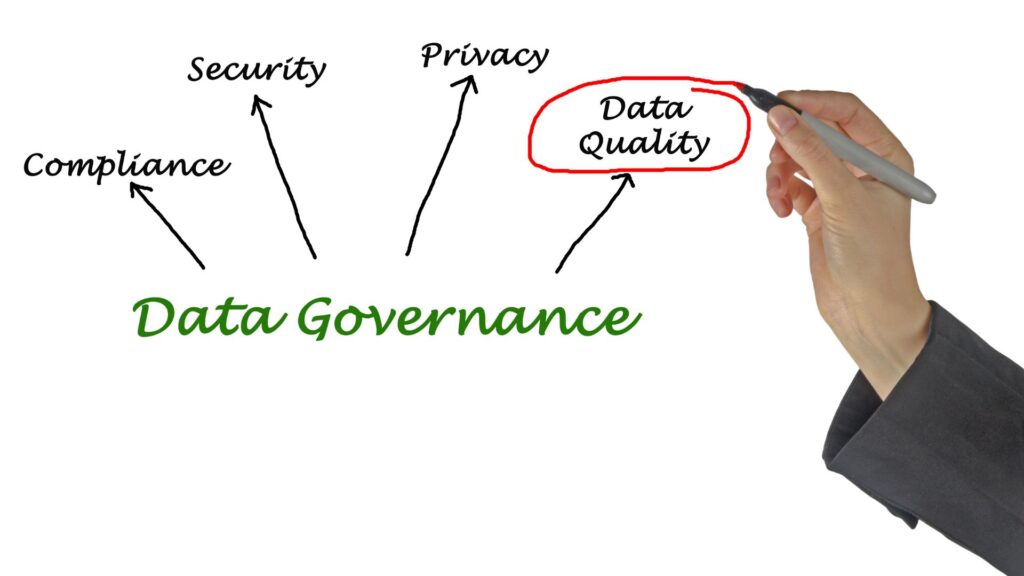
Confidentiality of contractual and commercial project data must be protected and auditable. In line with ISO 27001, access controls, version histories, and encryption protocols must govern all commercial and contractual records. Compliance with data privacy legislation is essential, especially where data is shared with funders, auditors, or regulators.
Conclusion
Governance is not a compliance exercise—it is the operating model by which infrastructure projects are delivered successfully. Execution and finance governance, supported by strong contractual, ethical, digital, and assurance systems, provides the structure necessary to deliver complex projects with clarity, control, and confidence.
When implemented rigorously, governance turns contractual obligation into commercial success.
References and Standards
- NEC4 Engineering and Construction Contract
- FIDIC Red Book (2017)
- AACE International RP (Cost Forecasting, EVM)
- ISO 31000 – Risk Management Principles
- ISO 27001 – Information Security Management
- SCL Delay and Disruption Protocol (2017)
- World Bank Anti-Corruption Guidelines
- Transparency International – Integrity Pact Toolkit